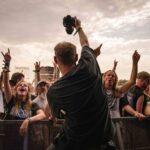
Mit ihrer Single „Leugenaar“ haben Maria Iskariot nicht nur in Belgien und den Niederlanden für Aufsehen gesorgt—der virale Live-Moment katapultierte die Band mitten ins internationale Rampenlicht. Seither wächst ihre Fangemeinde weit über die Landesgrenzen hinaus, ohne dass die Band einen Zentimeter von ihrer künstlerischen Vision abweicht. Ihre Texte bleiben bewusst auf Niederländisch, ihre Haltung kompromisslos, ihre Live-Shows roh, politisch und emotional zugleich. In diesem Interview sprechen Maria Iskariot über die Schattenseiten viraler Aufmerksamkeit, die Bedeutung ihrer Muttersprache, ihre Erfahrungen mit der deutschen DIY-Szene, den Einfluss der Festivalsaison auf ihr Debütalbum und die Dualität, die ihr künstlerisches Selbstverständnis prägt
Frontstage Magazine: Your single “Leugenaar” was released earlier this year and gained a lot of attention – especially through the viral live video. Looking back a few months later, how do you feel about the song and the response it received?
Loeke: The viral video put us in contact with a lot of new very cool people. It started a wave of nice oportunities which we are very gratefull for. But then it started living its own life. People used the comment section for discussions about all kind of stuff. Mostly people started a verbal fight. We tried to keep out of that toxic environment and focus on the comments of people that actually appreciate our music.
Frontstage Magazine: You continue to sing exclusively in Dutch, even as your audience grows far beyond Belgium. Has your perspective on language and identity changed since your international recognition began?
HELENA: It wasn’t a conscious political decision. Flemish is our mother tongue so it was just how it came out naturally. About the commercial success: we never expected being able to go abroad, we just didn’t see it as a possibility. You start making music because you love it, because it feels good. Then you play with likeminded people and you love it even more. Commercial success wasn’t what we were thinking of in the first place. The location of where we would play wasn’t our biggest concern, the thing that mattered was THAT we could play.
Changing our lyrics to english now, wouldn’t feel right. It would feel like betrayal. Also when we play live in Belgium or the Netherlands people also can’t fully understand what I’m singing live. But that’s normal, especially with harder music. You’re also not supposed to be listening like you are reading a book, you should be moved by the music. It’s about the energy. Still the lyrics matter a lot, and I am very picky about them. Every word is important. So I can only hope that when people listen at home or if they look up the lyrics, a new dimension of Maria Iskariot opens up for them. Translating the lyrics is no problem, but you should do it yourself, so you can make your own reality. This is because the words in themselves have power, the poetry is part of the language. If you translate you focus more on meaning and then you lose the aesthetics or feeling, of course. We are obsessed with meaning, but not everything is about meaning. Knowing this, and translating it yourself can open a new window for your imagination – and this is what poetry is about – it’s about you. (And about us- it’s about what connects you with us) So you lose some, you gain some 🙂
Frontstage Magazine: You played several shows in Germany this summer and appeared at a number of festivals. How did you experience the German scene, and how does it compare to audiences in Belgium or the Netherlands?
HELENA: We love the DIY culture in Germany. There is really something special about all the small festivals and the community centers organised by volunteers. You feel that the intentions of these people are pure,not driven by money, that they want to create a meaningful community, also trying to involve people that are more vulnerable, less social. We also felt like our German fans were extremely kind, bringing us for example diy maria iskariot pins, chatting with us after the show. For me Germany was definitely my favorite country to tour.
Frontstage Magazine: While working on your debut album, how much has the intense live period of the summer influenced you musically or thematically?
Loeke: it’s the first album we wrote together the four of us. Everytime we finished a song, we put in in our live show to make the song come alive. The live energy inevitably in the songs as they grow live. On a personal level we really were looking forward to going to the studio in between busy touring schedules. The studio is a place of deep concentration. It’s a counterweight that helps binding all the experience together artistically.
Frontstage Magazine: Maria Iskariot represents duality – contradiction, strength, and vulnerability. How has this balance evolved within your artistic identity over the past year?
HELENA: I worked as a war journalist in ukraine before the band exploded. Because of this we were together, all the time. This was very healing for me, it showed me another way. Friendship and creating beauty is the only real alternative for war, I would say. Obviously this made me a more grounded person. Also channeling all the anger, the despair, the sadness into songs and performing them the way we do, also was healing. Being surrounded by people that create space for you to be yourself is really priceless. I hope I can do the same for them as what they do for me. What this evolution will imply artistically we will see in the next album.
Fotocredit: Tina Lewis Herbots