Mit „Leather Temple“ schließt Carpenter Brut seine monumentale „Leather“-Trilogie ab und führt die Geschichte um Bret Halford alias Leather Teeth in eine düstere Zukunftsvision des Jahres 2077. Zwischen Midwichpolis, Slums und Overlords entsteht ein dystopisches Universum, das klanglich wie visuell die Handschrift des französischen Synthwave-Architekten trägt. Im Gespräch mit uns dem Frontstage Magazine spricht er über die dramaturgische Notwendigkeit einer Trilogie, die Verschmelzung von 80s-Nostalgie und 90s-Elektro-Härte sowie darüber, warum er bewusst narrative Leerstellen lässt, damit Hörer*innen ihren eigenen Film im Kopf erschaffen können.
Frontstage Magazine: Leather Temple marks the final chapter of your Leather trilogy. At what point did you realize this story needed to be told as a three-part arc, and what makes this last installment dramaturgically essential for you?
Carpenter Brut: From the start I wanted it to be a trilogy. I’ve always thought trilogies were cool in cinema, and it’s actually not that common in music. Since most of my tracks don’t have vocals, I need a strong visual universe that tells something. A trilogy gives you time to build characters, develop them, and put them through all kinds of adventures. But I don’t think I’m going to jump into a new trilogy now that this one is finished.
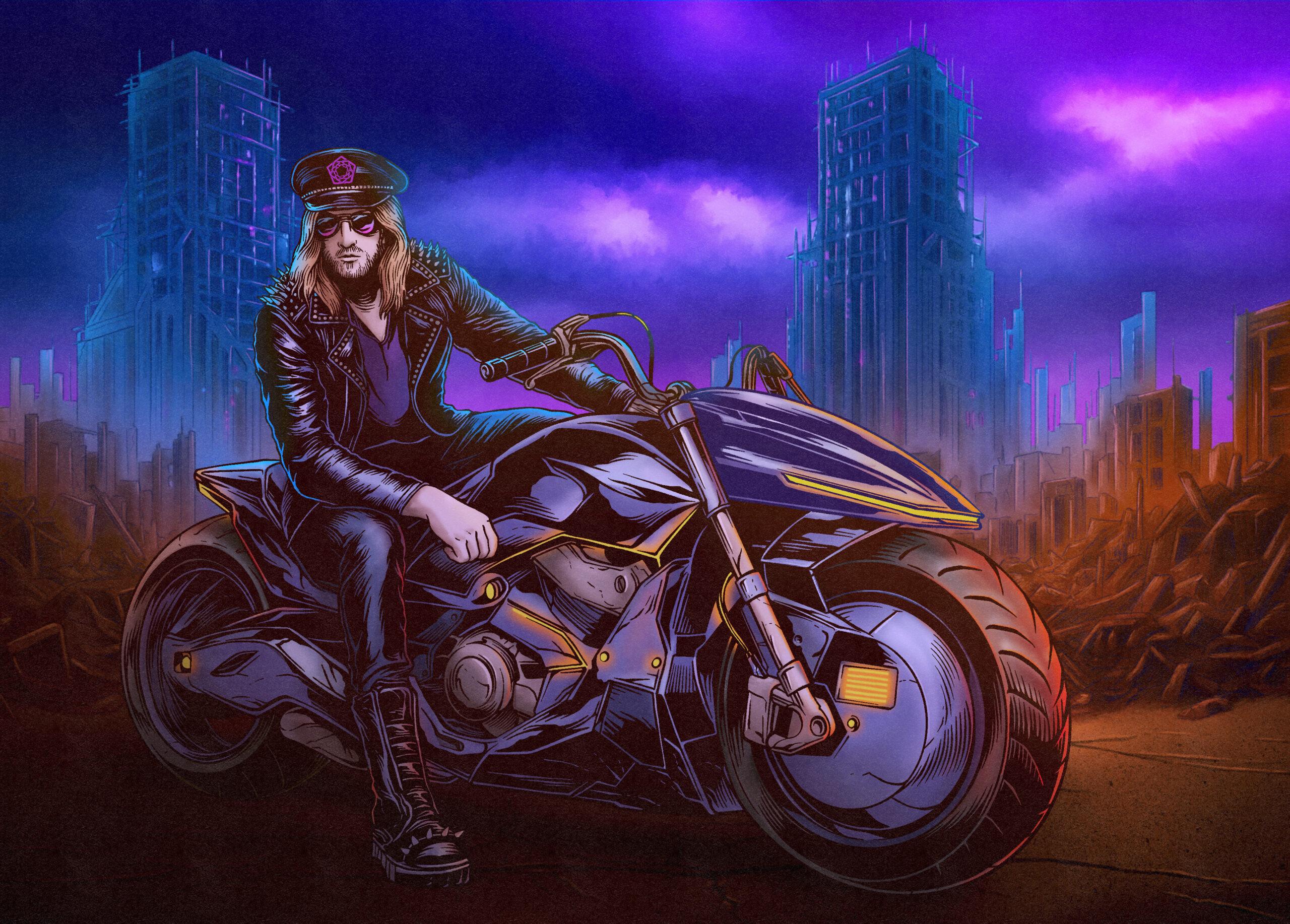
Frontstage Magazine: The narrative moves into the year 2077, creating a dystopian world shaped by Midwichpolis, the Slums, and the Overlords. Did this universe already exist visually and conceptually before you started composing, or did it evolve alongside the music?
Carpenter Brut: No, it evolved as the music came together. The overall idea showed up while I was writing Leather Terror: I wanted to end the story in the future. I’m a huge fan of Iron Maiden’s Somewhere in Time, both the album and the cover, and I wanted to pay tribute to it in some way. Not musically, necessarily, but I wanted my album to give the same feeling I had when I stared at that cover. And as the tracks took shape, the images, characters, and places started forming in my head, until Fortifem finally locked it all in on “digital paper”.
Frontstage Magazine: With Bret Halford, aka Leather Teeth, returning as a half-human, half-machine figure, how did you translate that transformation into the sound design? Are there specific synth structures, textures, or production choices that reflect this cyborg identity?
Carpenter Brut: I used sounds that are a bit more electronic than usual. More of that 90s electro vibe, like The Prodigy or The Chemical Brothers. I still kept some 80s tones because I find they always feel “reassuring”. I don’t know why, but the melancholic side of those sounds brings something familiar. And then the harder, more electronic 90s textures bring something colder, more immediate, more brutal. In the end, Bret Halford is kind of both.
Frontstage Magazine: Each track feels like a cinematic sequence — a chase scene, a dramatic cut, a visual moment without images. Do you actively think in terms of film scenes and storyboards while writing, or does that cinematic quality emerge intuitively during production?
Carpenter Brut: I don’t go that far with the cinematic thing. I keep the idea of a movie scene, but I don’t get into details. I don’t have exact images like a film composer would. I picture something in my head, but it’s not super defined. Just a chase, a fight, a wide shot over a city. That’s enough for me to write.
Frontstage Magazine: The album hits fast and hard, acting rather than explaining. Was it a deliberate decision to leave narrative gaps and allow listeners to immerse themselves more deeply in interpreting this dystopian world?
Carpenter Brut: I like imagining things when I listen to music. And I like the idea that people make their own movie while listening. Music is someone composing it, and someone else giving it life and meaning when they hear it. The less information I give, the more people can make it theirs. That’s also an advantage of staying instrumental, even though I love vocal tracks. It makes that sense of ownership even stronger for the listener.
Fotocredit: Illustrations / Førtifem